You can create the best marketing content in the world, but if your website or product doesn't reflect what you sold, all that effort could go to waste.
So how do you ensure buyers get what they pay for? The answer is a great user experience (UX). Specifically, solid UX writing. This type of content creation generally sits with product development or design teams, but it can and should be much more connected to marketing efforts and the entire customer lifecycle.
So what is UX writing?
UX writing is a lot more than clever words on a website or in a software product. It’s a discipline that goes hand-in-hand with UX design and UX research. Often called “content design”, it uses deep knowledge about customer needs and expectations to guide users through a digital experience.
UX writing is part of all the microinteractions that make up the macroexperience you sold in your marketing materials. More concretely, you’ll see it in action through:
- sign-up and onboarding flows
- confirmation messages
- call-to-action buttons
- menu structures
- in-app and push notifications
- and so much more!
Unlike marketing content, UX writing should more or less go unnoticed. It makes the experience so smooth that users don’t stop to think about it. But at its worst, poor writing on a website or in an app can cost a company countless leads and strike a blow to customer retention.
Copywriting “vs.” UX writing: What’s the difference?
A lot of resources online, and even people you meet within the writing disciplines, position copywriting and UX writing as opposites. They claim that the missions are so different that they can hardly relate to each other. But that’s not how we see it at Helion: They both play important roles in the customer lifecycle.
In content marketing, we put our energy into attracting awareness, building engagement, and gathering leads. We do this by understanding the things that make people “tick”, and then turn that into storytelling. This is essential to getting new customers in the door.
With UX writing, the focus is on guiding them through whatever experience you offer them. You encourage them to use the product, upgrade as needed, or simply remain a customer. We accomplish that by understanding their needs, anticipating their questions, and giving them the smoothest experience possible.
But how can you tie these two disciplines together? The common link should be your brand guidelines and tone of voice. By basing these guidelines on user research and customer insights, you can carry your brand through every piece of content you create (even the microinteractions!).
Long story short? All the effort a company puts into creating these kinds of guidelines shouldn’t end when someone becomes a customer. As a team, marketing content and UX writing have the ability to delight the customer, turning them into ambassadors of your brand. 
Marketing content traditionally sits in the Attract and Engage stages of the customer lifecycle. UX writing can take over from there to continue to engage and delight your customers.
Three golden principles of UX writing
There are many principles that play into user-centric content, from readability and accessibility guidelines to content hierarchy and nitty gritty writing tactics. However, there are three non-negotiables:
1. Be clear and concise
Cut the fluff. UX writing is supposed to reduce cognitive load, and you’re often short on space anyway. In other words: Make the path as easy as possible for the user.
2. Be informative and actionable
Always remember the context your user is in. Match their mindset, anticipate their questions (preferably through user research), and then use strong verbs to tell them what to do next.
3. Speak their language
Use vocabulary that resonates with your audience. If they’re a technical bunch, some jargon is probably okay – but most of the time, plain language will do. Either way, tap into your brand’s tone of voice that is already based on customer insights.
Tracking UX writing performance
One of the major benefits of UX writing is that you can measure the impact of your investment. Even small changes to copy or visuals can make a huge difference for sales and customer retention.
Google’s hotel search is a classic example. After changing a CTA button from “Book a room” to “Check availability”, engagement increased 17%. This showed them that users weren’t ready to commit to booking a room, but were just exploring their options.
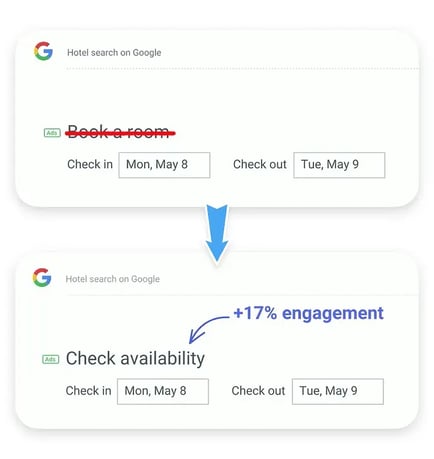
Making simple changes to copy can make a huge difference for engagement and conversion.
Or take HubSpot’s success story: Writers, designers, and researchers teamed up to redesign their website all the way from the wireframing stage. The results? “Get started” conversions doubled and demo requests increased by 35%.
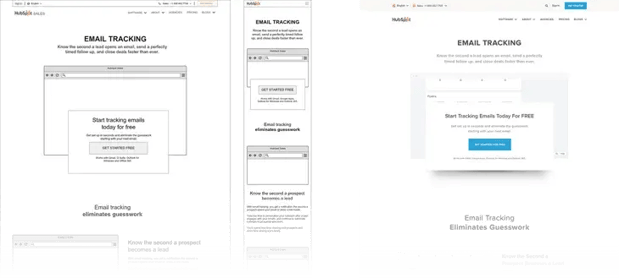
Combining marketing and UX forces from the beginning of a website redesign can lead to impressive results.
Sales KPIs linked to UX
If your product and sales departments don’t often mix, it doesn’t’ have to stay that way. Here are some tangible metrics you can work towards together in your UX copy:
- Lower abandonment rates in sign-up flows
- Higher conversion rates of demo requests
- Higher conversion rates on trial-to-paid customers
- Higher conversion rates on feature or product upgrades
- Shorter sales cycles
Customer retention KPIs linked to UX
The user experience is very much about delighting your customers. And often, existing customers can be a major source of revenue. In other words, you really shouldn’t take them for granted. These are direct ways UX writing can impact customer retention:
- Higher Net Promoter Scores (NPS)
- Higher Customer Satisfaction Scores (CSAT)
- Higher feature adoption rates
- Fewer calls to customer service
The bottom line: Strategic UX content builds on your marketing and customer service efforts. It helps improve brand perception, ease onboarding, and lower support costs.
Stop guessing, start guiding
Is there friction on your website or in your software product? Would you like to see higher conversions, lower abandonment rates, fewer calls to customer support? Try applying the three UX writing principles to a certain area of content, and track the difference it makes.
Companies that prioritize clear, human communication will outperform the competition every time. We are confident of that.